


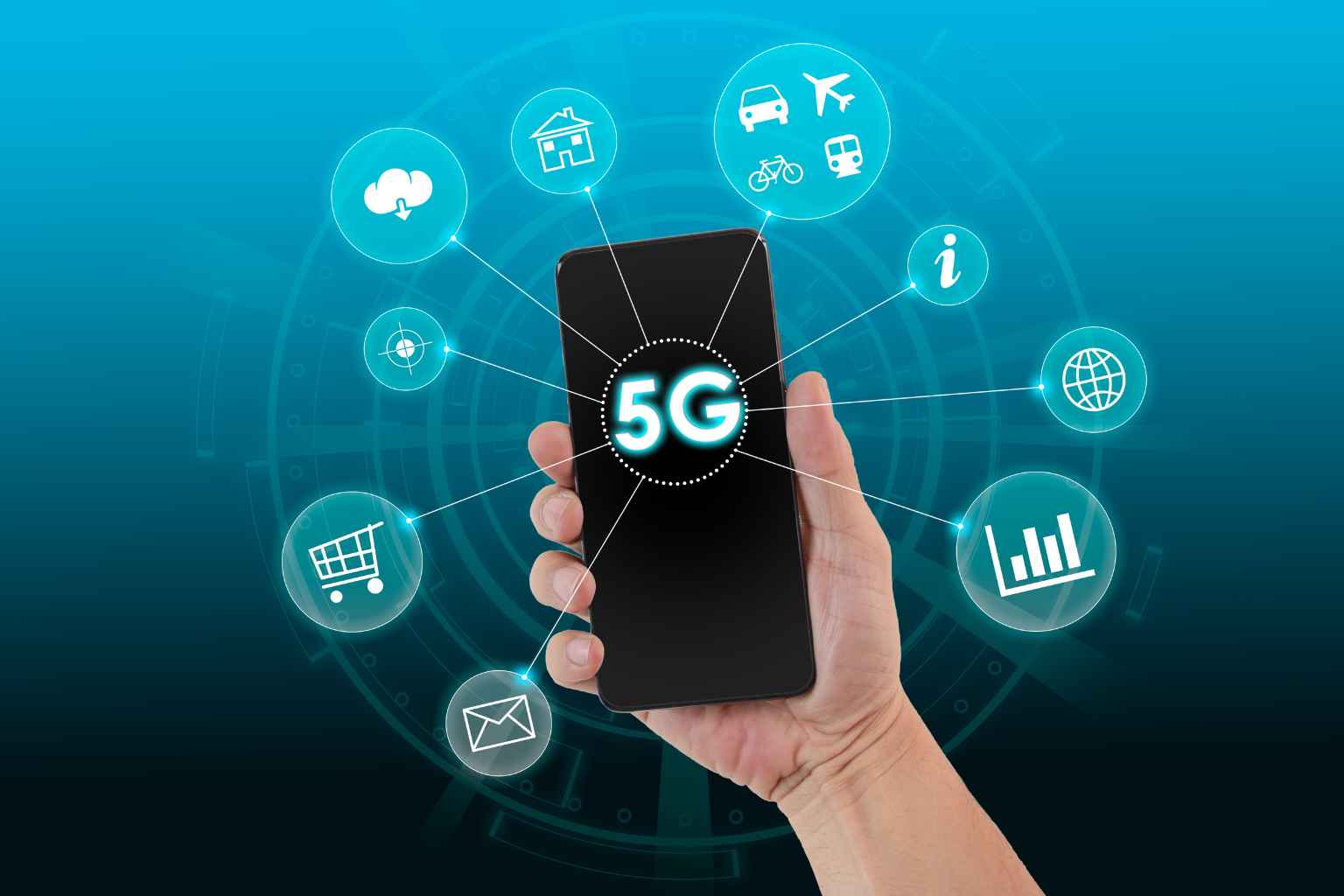
When 5G first hit the scene, it came with one main promise: speed. Yet as the technology develops, it’s becoming increasingly apparent that 5G’s great promise is much bigger than just faster downloads. It is fast becoming the spine of innovation in every field, from urban planning to economics, from communications to transportation. From health care to transportation, after all, the next jump that 5G represents is not just in mobile broadband but in changing how the world works, talks and develops.
1. The Evolution of 5G Technology
5G isn’t simply an evolution of 4G it represents a whole new way that society uses wireless Internet. Engineed for ultra-low latency and massive bandwith, it enables billions of devices to be connected together seamlessly.
Core improvements include:
- Data speeds up to 100x faster.
- Less than 1 millisecond of latency.
- Capability of 1 million devices per square kilometer.
It is this strong foundation that 5G can play the role of future world’s digital nervous system.
2. Fueling the IOTestiaurants Internet of Things (IoT)
The Internet of Things depends on seamless, instantaneous communication among countless devices — and 5G makes that possible. Smart homes, cities and factories, rely on this superfast network.
Applications include:
- Smart meters and networked home appliances.
- Real-time tracking in production and logistics.
- Smart city traffic control system.
Unlike 4G, which enables our devices to talk and listen, now they can think.
3. Transforming Healthcare Through Connectivity
5G is driving innovation in the next era of healthcare. The result is that telemedicine, robotic surgeries and remote diagnostics which are increasingly informed by artificial intelligence have likely never been so efficient.
Key impacts:
- Robotic tools allow doctors to conduct surgeries remotely.
- Hospitals can receive telemetry from wearable health monitors in real time.
- Connected ambulances improve response times in emergencies.
That is technology closing the virtual gap in health care while saving lives with precision and rapidity.
4. Enabling Autonomous Transportation
Self-driving cars require real-time data sharing between vehicles, sensors and the infrastructure. Split-second decision-making is impossible, at least not without ultra-low latency enabled by 5G.
Potential developments include:
- Connected vehicle-to-vehicle (V2V) communication.
- Although smart traffic systems also relieve congestion and accidents.
- Real-time updates for public transport.
5G makes the vision of safe and smart mobility in a connected car world, worldwide.
5. Revolutionizing Manufacturing with Industry 4.0
5G lights up the factories of the future Machines, sensors and A.I. systems communicate in real time to analyze data and increase efficiencies in production and maintenance.
Advantages include:
- Predictive maintenance reducing downtime.
- Real-time quality control and automation.
- Safety benefits for workers from networked machinery.
5G powers the Industry 4.0 transformation— speed up production, work smarter and build greener.
6. 5G’s future in smart cities
5G is transforming cities into living organisms where technology and infrastructure are gracefully synchronized. It provides the underpinning for efficient operation of urban systems—controlling energy use to managing waste.
Smart city applications:
- Real-time traffic and pollution monitoring.
- Automated street lighting systems.
- Connected watchful eye networks to protect the public.
It’s these sorts of advances that make cities safer, greener, and more responsive.
7. Transforming Entertainment and Gaming
5G is transforming entertainment, and while it’s challenging to design an advert that directly reflects a virtual reality (VR) or augmented reality (AR) experience they are making possible today for everyone, this billboard serves to remind us we’re in reach.
Key experiences include:
- Lag-free online gaming.
- Immersive AR shopping and tourism.
- Live sports streaming with multi-angle views.
Entertainment is not a passive process anymore – it’s an active, live experience.
8. Boosting Agricultural Efficiency
5G is being used in the agriculture industry to improve productivity and sustainability, or smart farming.
Applications include:
- Drones for precision crop monitoring.
- Automated irrigation systems.
- So even better yield planning with real time weather and soil information.
5G enhanced IoT makes farms data-driven environments that will help feed an expanding world population.
9. Enhancing Data Security and Network Slicing
5G brings us network slicing, creating multiple virtual networks in a single physical infrastructure. This allows for security and customisation for certain sectors such asBanking or Healthcare.
Benefits of network slicing:
- Improved data privacy and user control.
- Dedicated performance for critical operations.
- A high effective bandwidth in different directions.
This capability is instrumental in enabling 5G to be tailored for a wide range of business applications.
10. The Road Ahead: 6G and Beyond
As 5G continues to roll out, the research for 6G is already starting. The next generation of networks will embed AI, quantum computing and satellite connectivity to provide global intelligent communication architectures.
The next jump will not only network people, it will interconnect the physical, digital and biological worlds in a single connected ecosystem.
Key Takeaways
- 5G is the changing global game beyond faster internet.
- It is the fuel of IoT, smart cities and autonomous technology.
- Health care, manufacturing and entertainment are being rewritten.
- Network slicing to provide security and customization for enterprises.
- The road to 6G will deepen connectedness in every facet of life.
Conclusion
The real revolution of 5G is possibility, not speed. It’s the base for a future in which every device, car and service talks – intelligently. As entire industries take the next big leap, 5G will power smart cities, advanced healthcare and a more connected world. It’s just the beginning of the fast new internet age – and it has nothing to do with movie downloads.
FAQs:
Q1. What is different about 5G versus 4G?
5G is faster, has less lag and can connect more devices at once.
Q2. How does 5G impact healthcare?
It offers the opportunity to perform surgery from a distance, monitor health from wearables and respond instantaneously in emergencies with shared life-saving information.
Q3. Is 5G useful for smart cities?
Yes. It supports intelligent transport mechanism, power saving and better public safety services.
Q4. Is 5G safe for businesses to use?
Network slicing and encryption make 5G more secure and suitable for bespoke enterprise solutions.
Q5. What comes after 5G?
6G should merge AI and quantum tech for even faster, smarter global communication.
