


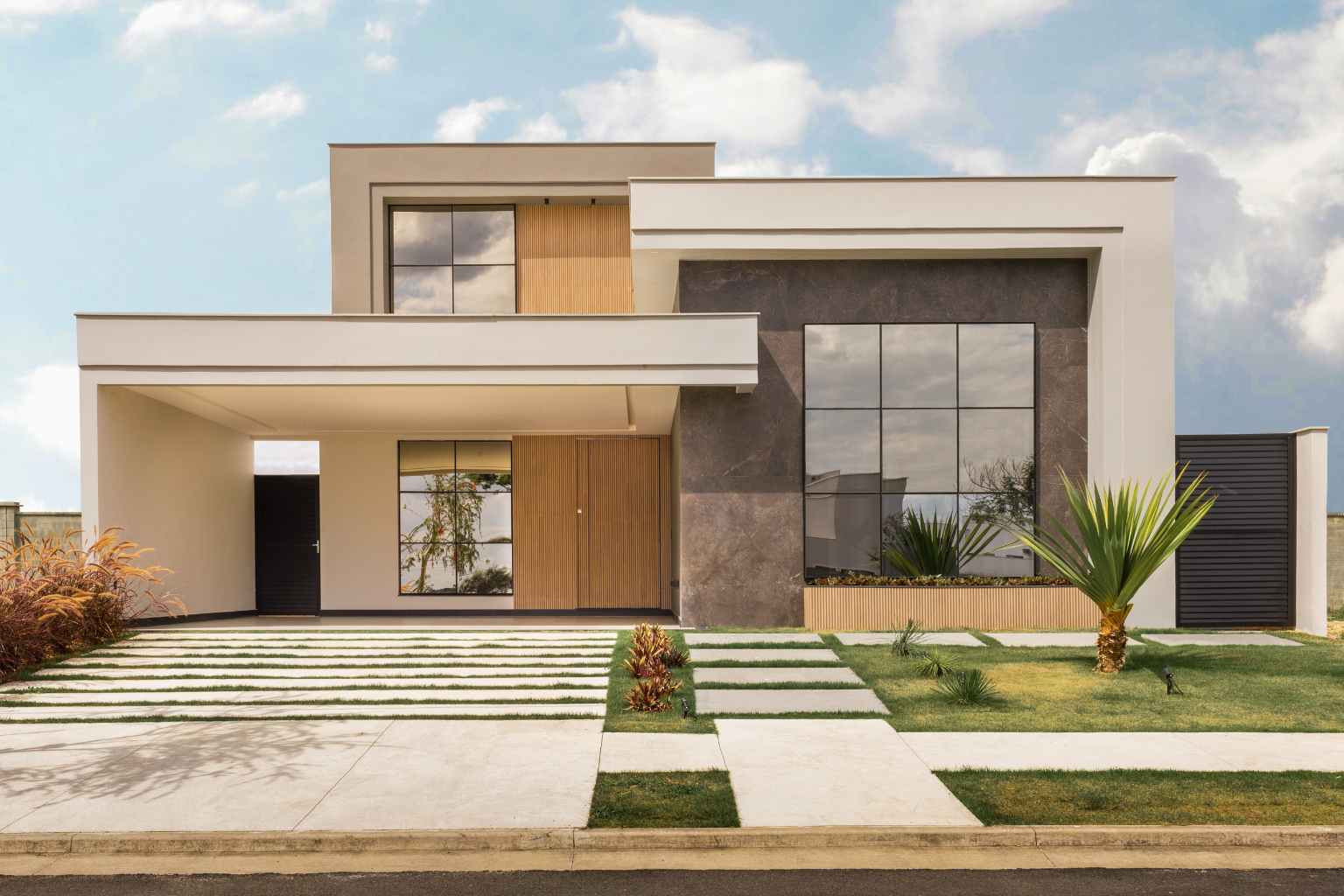
Building housing that is both affordable and sustainable has become a priority for governments and developers around the world. That’s where 3D-printed homes come in – a game-changing innovation that could transform the future of real estate. By taking advantage of cutting-edge robotic machines and the latest that additive manufacturing has to offer, we’d be able to 3D print for ourselves sturdy living accommodations in a fraction of the time at a fraction of the cost than traditional construction methods. In places like India, where rapid urbanization confronts intensifying need for housing, 3D-printed homes could unlock the potential to address the affordability crisis even as they turn the screw on sustainable tech-driven development.
1. What Are 3D-Printed Homes?
3D-printed houses are buildings that large printers fabricate by depositing material in layers (concrete or a composite mix) to create walls and even structures, from the bottom up. The technology, called additive construction, layers material up from digital blueprints without the need for manual bricklaying. The result is that it contains less waste, uses fewer resources and can bring more creativity in architectural designs. These houses are no longer futuristic experiments, but they’re on the way to becoming an affordable option for housing real people all over developing and developed countries.
2. How 3D Printing is Used for Building a House
A 3D-printed home is built to blend the digital design with robotic precision.
Examples of steps in this process are:
- Design: Architects make a digital 3-D model of the form.
- Material Preparation: Concrete: a special concrete slurry is prepared for printing.
- Printing: A robotic arm squirts out layers of the material to build up walls and supports.
- Conventional installation: It is fitted with doors, windows, circulation elements, plumbing and electricity by hand.
- Finishing Touches: The home is ready for paint, flooring and interior finishing.
This rapid process can also produce a basic home in just days a significantly shorter time for building than the months that one-off construction projects usually take.
3. The Advantages of 3D-Printed Homes
3D printing is an attractive process due to its rapidity, environment-friendly nature and cost-effectiveness.
Major advantages include:
- Lower cost of building with less waste,using a fraction of the quantity.
- Quicker project turnaround – homes can be built in a matter days, rather than months.
- Options for personalization with digital design flexibility.
- Improved structural accuracy and minimized human errors.
- Green construction practices that utilize sustainable materials and generate less waste.
These factors make 3D-printed houses a good solution for economic as well as environmental woes in housing.
4. 3D Printing and Housing Affordability
Housing affordability is still a major global issue, especially in up-and-coming spheres of the economy such as India. 3D printing can reduce expense enormously by significantly reducing the cost associated with labor, materials, and time.
- Almost 30% of construction cost decrease is due to labor savings.
- Automation reduces reliance on skilled workers.
- Materials are locally sourced to reduce transportation costs.
- Fine print system minimizes rework and materials waste.
- Quicker construction times can make housing more affordable to low-income families.
Advicted: Creative Commons Only thanks to these 3D printing can become a viable approach of finding fast and affordable housing without sacrificing quality and safety.
5. Sustainable Aspect of 3D-Printed Construction
One of the strongest attributes of 3D-printed housing is sustainability. The method also entails using far less material and producing fewer carbon emissions than traditional construction. Some companies were even trying to print with recycled con crete and bio-based printing materials. Moreover 3D-printer homes are energy-efficient with insulation and natural cooling structures integrated. This blend of environmentally friendly manufacturing and energy-efficient design follows India’s green-building objectives and global climate pledges, making 3D homes affordable and planet-friendly.
6. INDIA’S EARLY ADOPTERS IN 3D PRINTED HOMES AND PROJECTS
India has already begun to experiment with 3D-printed housing. In 2021, Tvasta Manufacturing Solutions, an IIT-Madras-incubated startup, launched the country’s first 3D-printed house. The project proved that it was possible to build sustainable and low-cost homes with materials sprouting from the local ground. Now similar efforts are springing up in states like Tamil Nadu and Telangana with the help of government housing missions. The market opportunity is growing as both private and government interest in 3D printed housing increases, and India appears to be a leader for affordable 3D printed homes across Asia.
7. Challenges Facing 3D-Printed Housing
Although the potential is there, 3D printed construction has a few barriers to overcome in order to go mainstream.
Key challenges include:
- Large entry price of purchasing big-scale 3D printers and its materials.
- Shortage of qualified workers to use sophisticated tools.
- Lack of regulation and standardised codes.
- Lack of printable resources for specific regions.
- Strong infra support is needed like power and connectivity.
To combat these challenges, developers, policymakers and technology providers should work together to establish an enabling environment for innovation.
8. Global Success Stories and Innovations
Already, 3D-printed homes are transforming lives around the world. In Mexico, New Story Charity collaborated with ICON to construct complete 3D-printed neighbourhoods for families living on low incomes. Companies in the United States are building entire neighborhoods with 3D printing, hoping to cut costs as well as waste associated with housing construction. This technology has also been adopted by entities in Europe and the Middle East, as Dubai announced that it wanted 25% of its buildings to be 3D printed by 2030. It was these achievements that demonstrate the worldwide possibility for additive construction to recast the housing sector.
9. What 3D-Printed Housing Could Mean for the Economy and Society
In addition to being affordable, 3D-printed homes contribute to the economy and society overall. Through faster, cheaper housing, governments can mitigate homelessness and make living more secure for many people currently living in vulnerable circumstances. The local economy benefits from the creation of new jobs in design, software and material technology. In universities can partner with startups to develop hubs of innovation associated to sustainable building. Disaster assistance organizations are also looking at 3D printing as a rapid way to create new homes in disaster hit regions. This tech could be a tremendous force for development and social welfare.”
10. The Future of Housing: Innovation and Inclusion Combine
The key to the future of 3D-printed housing is scale, accessibility and intelligent integration. With falling prices and advancing technology we could see 3D printing combined with AI and IoT systems to form smart, autonomous homes. “Government, startups and real estate developers will have to collaborate the most to skyrocket mass adoption. By marrying technology with humanitarian need, 3D-printed homes may be able to close the divide between the two; heralding a future where affordable, resilient and inclusive housing is available across the planet.
Key Takeaways
- 3D printed houses bring affordability, sustainability and design freedom to new living demands.
- It is used to cut construction costs, accelerate work and minimize waste.
- India is stepping up on the regional innovation front for 3D printed housings.
- Issues include high system cost and no standard.
- The future boasts smarter, more sustainable houses constructed rapidly and with precision.
Conclusion
Habitat for Humanity and ICON aren’t the first organizations to come up with the idea of 3D-printed homes, but they both believe that the technology has reduced costs enough to make these houses more than a dreamy example of futuristic design instead, they represent a possible solution to one of humanity’s great crises: affordable housing. With its combination of efficiency, sustainability and availability this invention can change the construction world. In India and elsewhere, the technology is closing in on opportunities for millions to own safe, sturdy and eco-friendly homes. As the technology of 3D printing advances, it brings with it a vision of what the future might look like when technology is used to make not only progress but also people where tools provide a foundation for helping us all live in a more equitable world.
FAQs:
Q1. What are 3D-printed homes constructed with?
3D-printed homes are typically made of specialized concrete mixtures, composites and sustainable materials such as recycled aggregates.
Q2. How long does it take to build a 3D-printed home?
A typical one-story home can be built in just 3-7 days depending on the size and design variables.
Q3. Are 3D-printed homes durable?
Yes, these houses are built to meet structural safety codes and can sustain environmental pressures with proper attention.
Q4. What are the biggest stumbling blocks to 3D-printed housing in India?
Obstacles include high equipment price, shortage of capable workman, and unification of building codes and standards.
Q5. Will 3D-printed homes help fix India’s housing shortage?
Yes, 3D printing can be used to speed up affordable housing projects when scaled with government backing such as in urban and rural development plans.
