


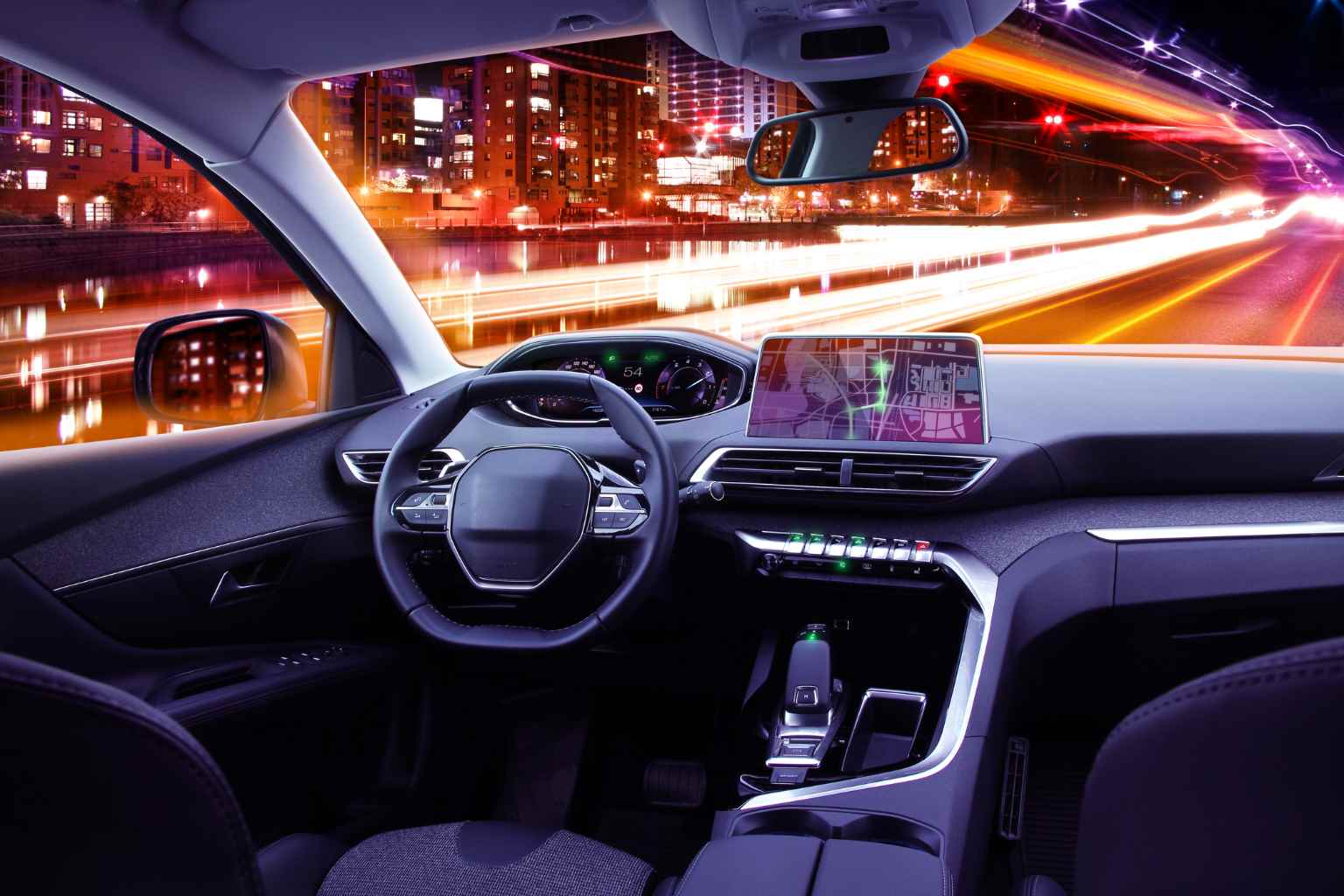
Today’s vehicle is more than a mode of transport, it’s an intelligent adaptive space that can provide comfort, safety and personalization. As AI takes the wheel in the auto industry, car interiors become an empathetic space that senses and adjusts to individual needs. Ranging from predictive climate control, to emotionally intelligent lighting, to voice-activated assistance and fatigue-reducing seating AI is changing the way we experience driving comfort. The future of car interiors has arrived and it’s a perfect union between technology and human instinct.
1. The Evolution of Car Interiors
Car interiors have come a long way from being just functional compartments to digitally enhanced ecosystems. Early vehicles were all about mechanical control and utility, but today’s car is an extension of the user’s lifestyle. Touch screens, infotainment systems and adaptive controls have established the base for smart interiors. These spaces are also getting smarter with AI, learning user preferences and adjusting to mood, habits and surroundings. Now the discussion is not about horsepower, but rather “the human experience.”
2. Robots Go Shopping in the Quest to Perfect Their AI Squadrons
AI is revolutionizing interior design by transforming cars into interactive spaces. With live information from sensors, cameras and connected devices, cars will forecast what drivers need and set up accordingly.
Some of the AI-infused features that can be found in most interiors today include:
- Predictive posture system using driver profiles.
- Voice activated systems for hands free use.
- Facial analysis-based emotion detection, to modify the lights and audio.
- Personalized infotainment recommendations.
- Individual body temperature activated intelligent heating.
These smart systems are turning driving into a safer, more convenient and more hyper personalized activity – they’re bridging the chasm between data science and human comfort.
3. The era of the intelligent cockpit
The old dashboard is giving way to an intelligent cockpit, which becomes a single, connected digital space for navigation communication and infotainment.
- Real-time information is displayed on multiple screens and augmented displays.
- With voice-based assistants of AI, the distractions will surely be less and their usage will provide you with an absolutely refreshing control.
- People can interact without skin contact through gesture-based commands.
- “The cockpit adapts so that the software learns from the driver’s preferences, and unfolds a familiar working environment.”
- Predictive alerts provides visibility into vehicular health and road safety.
And that is when everything from planning your route to selecting your media happens completely seamlessly: it’s the driving of the future.
4. Personalized Comfort Through Predictive AI
Predictive personalization is one of the most transformative approaches enabled by AI-powered interiors. Automobiles that learn to predict user preferences before the driver gets into the car.
Examples of predictive comfort include:
- Automated seat and steering wheel changes for each driver.
- Personalized lighting for time of day or mood.
- Push your preferred temperature and scent profiles automatically.
- Curated track lists based on driving conditions or mood.
- AI-powered health tracking on road trips.
By anticipating needs with data, vehicles are becoming personalized sanctuaries that change and adjust just as fluently to the way humans behave.
5. Emotion-Aware Technology in Cars
Emotion recognition is the next frontier for in-car AI. Facial recognition, body sensors and voice tone analysis can be used to assess emotions like fatigue, stress or excitement. If the driver seems tired, dimming the interior lights or playing soothing music can help prevent fatigue. On the other hand, when passengers appear energetic, lighting and music can transform to a more dynamic sound and feel. Emotion-aware AI narrows the distance between comfort and safety by making sure that the driver feels good with his environment, leading to less stress and more attention.
6. Sustainability and Smart Design Materialization
Future car interiors are not just about comfort and technology; it’s about being sustainable as well. And manufacturers are not sacrificing luxury while doing so, incorporating sustainable materials from recycled plastics to plant-based fabrics and natural fibers. AI-powered design systems study how these materials respond to temperature, sound and light in order to enhance both aesthetics and performance.
Sustainable interior design innovations include:
- Vegan leather and biodegradable textiles.
- Natural soundproofing using organic fibers.
- Smart ventilation systems that filter the air.
- Modular, forward interior for future customization.
- Energy-efficient ambient lighting systems.
This is a melding of technology and sustainability, a move towards conscious comfort – where innovation meets an ethical concern for the environment.
7. Voice and Gesture Commands as Enabling Factors
Voice and gesture technology are obviating the need for actual buttons, creating cleaner, more streamlined vehicle interiors. It even knows when you get emotional: AI-powered voice assistants like Amazon’s Alexa Auto and BMW’s Intelligent Personal Assistant can understand human language and follow multi-step instructions, but they can also detect your mood. Gesture controls, meanwhile, enable drivers to change music or volume by waving their hands. These new technologies increase convenience and add a measure of safety to driving by reducing distraction and letting drivers keep their eyes on the road.
8. Self-Driving Cars and the New Outsides Inside Your Car
As driverless technology continues to evolve, the idea of car interiors will change significantly. With drivers no longer required to assume control as necessary, cars become living spaces on the move for relaxation, work or entertainment.
Key transformations include:
- Seats that can rotate to face one another.
- Folded tables and touch with embedded surfaces for productivity.
- AR & VR based immersive entertainment systems.
- Quiet-cab, noise-canceling cabins for quiet rides.
- AI climate zones personalized for every rider.
Key to this evolution is the shift from “driving” to “experiencing,” with comfort and connection, not control, as the priority.
9. Challenges and Ethical Considerations
Artificial intelligence offers big opportunities but also huge challenges. Privacy Data privacy is a significant issue with vehicles that collect so much personal data. Producers need to have clear data-management policies and good cyber security. Then there’s the issue of dependence – will drivers rely on AI too much? In addition, ethics in designing emotion-sensing technology is important to prevent manipulation or bias. The fate of ingenious interiors is to strike an ever-moving equilibrium between convenience and accountability, one that dictates all the while that your comfort never threatens privacy or autonomy.
10. The future: a synthesis of intelligence and comfort.
Car interiors of the next generation will blur the lines between machine intelligence and human empathy. As AI is anticipating moods, optimizing health and personalizing experiences so vehicles will be extensions of your identity. Wearable and cloud services, even smart home integration will form harmonious connection in daily life. The car of the future will do more than move people – it will help feed them. Combining tactile comfort with A.I. capable of learning, the car is about to become the most personal smart space on wheels driving today.
Key Takeaways
- AI is turning car interiors into personal, emotional spaces.
- Smart Cockpits combine voice, gesture and predictive systems.
- Luxury and environmental responsibility are amplified by sustainable materials.
- Autonomous vehicles will revolutionize cars as moving rooms of life.
- Ethical and transparent data use will be key for future acceptance.
Conclusion
Comfort and artificial intelligence, when united, are transforming what it means to design a vehicle. Vehicles are moving from being static machines to dynamic, intelligent life spaces that respond to any driver’s state of mind, requirement and lifestyle. As technology evolves, the interior will increasingly be the beating heart of a car: where innovation meets emotion. In the new era, a car won’t just get you from point A to point B; it will travel with you, and respond to every moment with empathy and intelligence.
FAQs:
Q1. What are some examples of how AI is utilized in the interiors of cars today?
AI is behind personalization, emotion detection and voice-activated systems that control lighting, temperature and entertainment without being asked.
Q2. What is an intelligent cockpit?
It is an AI-based interface which incorporates a digital control, voice command etc that improves user experience and safety.
Q3. Will self-driving cars revolutionize interior design?
Indeed, interiors will serve as versatile living spaces for working, chilling or entertaining in which the emphasis will be on comfort and connection.
Q4. Do AI car interiors guarantee privacy and safety?
Companies are employing robust encryption and ethical data protocols to ensure the privacy of users in AI systems.
Q5. What will the cars of the future be made from inside?
The cars of the future will be built with sustainable, eco-friendly materials such as recycled plastics and vegan leather, natural fibers improved by AI-created design.
