


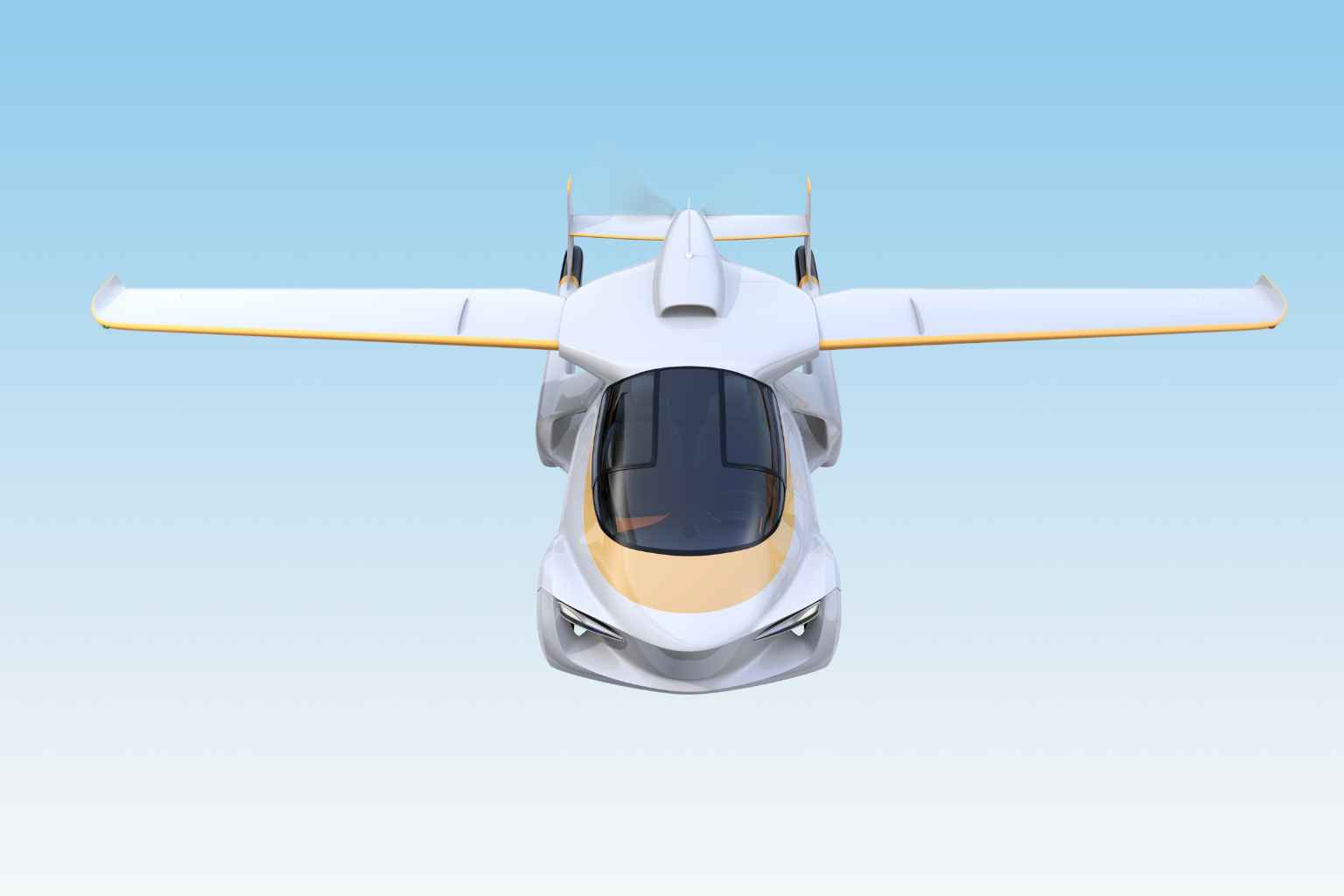
Humans have dreamed of flying cars for more than 100 years. From science fiction films to prototype homes, the dream of vehicles that can lift off the ground has captured our imagination. Today, that dream is getting closer to actually happening. Electric power, AI navigation and battery efficiency have combined to bring flying cars out of the realm of fantasy. But how much closer are we in reality to seeing them take off in our daily lives?
1. The History of the Flying Car Fantasy
The idea of the flying car goes back to at least the early 20th century. Inventors and engineers have sought for generations to combine cars and aircraft into a single machine. Those early efforts were foiled by issues of safety, cost and design.
Technology recently has brought us closer to the possibility of flying cars though, as progress in electric vertical take-off and landing (eVTOL) has rekindled the dream in the 21st century. Today’s prototypes can also take off for the sky like a helicopter and then tilt in flight to cruise horizontally, just like an airplane, nudging us closer toward practical flying cars.
2. How We Think of Flying Cars Today
A flying car isn’t simply a car with wings. Current models combine aspects of drones, airplanes and electric vehicles in an effort to develop stylish, small-scale personal air transportation systems.
The majority employ electric or hybrid propulsion and advanced flight software to allow for stable operations. You can get some that are entirely self-flying, or others that can also be flown manually or with assistance.
3. The Technology Making It Possible
Several technological breakthroughs are behind the flying car revolution:
- workable eVTOL engines that can take off and land on the fly.
- Use lightweight material like Carbon Fiber for better aerodynamics.
- AI flight systems for navigation, safety and traffic coordination.
Combined, these inventions are starting to eliminate the obstacles that for years have made flying cars seem impractical.
4. The Leading Bidders in the Race for Takeoff
Urban air mobility is a sector in which companies are pouring billions of dollars around the world.
Leading innovators include:
- Joby Aviation (USA): Building silent electric flying taxis.
- AeroMobil (Slovakia): This hybrid is a car and an aircraft that can be converted from roads to the air in minutes.
- Volocopter (Germany): Short-haul, urban air transport.
- XPeng AeroHT (China): Developing consumer-grade flying vehicles for city use.
Every company is testing actual prototypes, which is an indication the industry has moved beyond experimentation.
5. The Role of AI and Automation
The flying car revolution has AI at its core. AI enables control of flight, navigation, obstacle detection and evaluation of weather.
The public has solo pilots, but the technology also requires access to autonomous systems for flying cars to be viable at the scale Airbus envisions – not everyone can be a pilot. AI makes it stable and safe, even in a dense urban environment.
6. Overcoming Infrastructure Challenges
Among the largest hurdles is building an infrastructure that allows for flying vehicles. Cities will need “vertiports” – small takeoff and landing hubs with charging stations and maintenance facilities.
Air traffic management to avoid mid-air congestion is already being tested by governments and city planners. Without building on these, widespread operations for flying cars are still a distant dream.
7. Environmental and Energy Considerations
Sustainability and the future of flying cars. Electric propulsion systems emit less carbon than helicopters or planes. But production and battery use still carry an environmental footprint.
Manufacturers are looking at renergy-driven charging and using recyclable parts with a view to make air mobility an eco-friendly operation in the long run.”
8. Safety Regulations and Legal Barriers
Flying cars will have to pass rigorous regulations before they can enter everyday use. The FAA (Federal Aviation Administration) and EASA (European Union Aviation Safety Agency), among other aviation regulators, are creating new standards for certification.
Safety remains the top priority. Regulations need to address more than just flight operations to airspace coordination and pilot licensing, but also air traffic, emergency response.
9. When Will We Have Flying Cars?
The prototypes have already begun test flights all over the world, and limited commercial operations are anticipated as soon as 2026-2030. At least to begin, flying cars will start life as air taxis in a few cities and not as personal rides.
Affordable cost solutions, and safety approvals will fuel mass adoption, along with advances in charging and landing infrastructure. While we’re near, flying cars you can use everyday remain a few years from reality.
10. The Road (and Sky) Ahead
The road to flying cars isn’t just about technological advancement – it is becoming a symbol of the future of human travel. Lining up electric propulsion, AI and urban planning, the sky really could be part of our daily commute.
By 2035, flying cars could change the world – the way people work, commute and travel from city to city or town to town more quickly and efficiently than ever.
Key Takeaways
- Flying cars are becoming feasible thanks to eVTOL engines, AI, and lightweight materials.
- Other companies, like Joby Aviation and Volocopter, are also doing real-world testing.
- The main obstacles to widespread use are infrastructure and regulations.
- The sustainability is concentrated upon with renewable energy and efficient designs.
- In 2030, flying taxis might even clog the skies above major cities.
Conclusion
Flying cars are not just the stuff of science fiction anymore – they’re a near-future reality created by forward-thinkers driven to innovate, to improve our world, and to fulfill all of our wildest Jetsons-like fantasies. Cost, infrastructure and regulation challenges remain, but the speed of development is picking up. Within the next 10 in years, city skylines could be filled with electric flying taxis as a new era of transportation begins. The pipe dream of flight is finally approaching reality in our daily lives.
FAQs:
Q1. What is a flying car?
An air car is an automobile that can travel on land and fly through the air with a small auxiliary power plant serving to make it into one of four types of aircraft, all of which were developed in the second half of the 20th century by Curtiss-Wright.
Q2. Are flying cars actually being built yet?
Yes. Companies such as Joby Aviation, AeroMobil and Volocopter are testing prototypes and preparing for regulatory approval.
Q3. How far off are flying cars for the masses?
“Flying taxis” could be in use by 2026–2030, with personal vehicles are likely to be available sometime after.
Q4. How safe are flying cars?
They are equipped with the most sophisticated AI navigation, multiple redundant systems and rigorous aviation-style testing to guarantee safety for passengers.
Q5. Are air taxis and flying cars good for the environment?
As you might expect, many of these are electric powered with low emissions, and the attention is on battery sustainability.
