


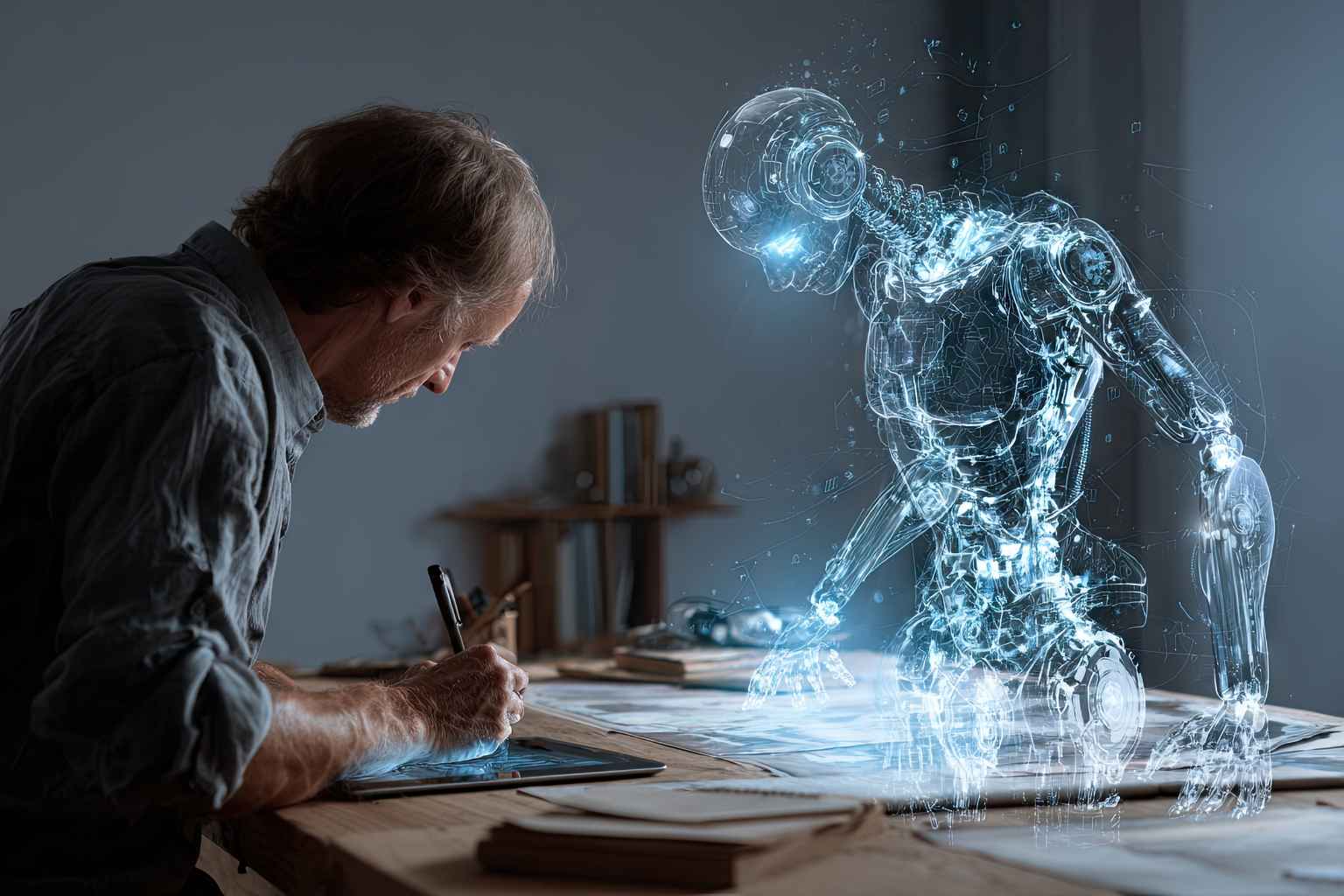
Recent changes in the Work Place The office place is changing. Automation is not seen as a threat to take jobs away, but a powerful tool that can help people do their jobs better. By taking on routine tasks or providing a more informed perspective while easing communication, AI-based collaboration tools are changing the way in which teams work, innovate and make decisions. The result is a new kind of workspace, one that combines human creativity and machine intelligence for unmatched productivity.
1. The Evolution of Human-AI Collaboration
The workplace has gone from a time when AI was used for automation to one where it’s a partner. The systems of today make employees smarter and faster in the way they think and work. The combination allows humans to contribute their emotional intelligence and remove obvious bad strategy decisions, while AI can provide data-driven precision and the speed needed to keep up with a rapidly unfolding game.
This give-and-take benefits more than productivity; it also ignites innovation in fields spanning health care, finance and creative design.
2. Integrating AI into Everyday Workflow
Now, there is no longer a gap between daily work and use of AI accelerators. They manage your schedule, help you make decisions and sift through reams of data in seconds.
And with companies increasingly tapping AI-based platforms, work that used to take hours now takes minutes. The focus has been about doing more work to doing meaningful work — and now it’s AI that enables it.
3. Smarter Communication and Virtual Assistance
AI-powered communication tools are now a staple in the modern day office, providing easy interaction and common understanding.
- Tools like Otter. ai, Grammarly Business and Microsoft Copilot that summarize meetings, proof writing and generate live feedback.
- The translation capabilities in tools such as Google Duet AI help break down language barriers for distributed teams around the world.
Intelligent assistants like these are making sure communications systems remain seamless, even across the continents.
4. Automating Repetitive and Time-Consuming Tasks
AI is especially good at repetitive work that saps employees’ focus. (Automation tools swoop in, picking up the slack on routine work and freeing up professionals to focus on strategic projects — and creative thinking.)
Examples include:
- Data inputting and reporting using UiPath or Zapier.
- Chatbots, AI and customer support automation.
- Intelligent scheduling and structuring of documents in digital desktops.
Automation not only improves accuracy, it boosts morale also and keeps teams enthused and on track.
5. Data-Driven Decision-Making
Organizations are being armed with AI-powered analytics platforms that enable them to realize accurate insights that had previously been lost in their vast, intricate data sets. These tools process information faster than humans ever could, assisting leaders in making decisions that are more fact than gut instinct.
“Predicting sales, managing risk, forecasting market trends… And all decisions made by data that we can trust”. It’s human judgment in the lead, but with AI giving the confidence to take action.
6. Personalized Employee Learning and Growth
Through AI, workplace learning is becoming personal: choosing individual skill gaps and recommending appropriate courses. Platforms such as LinkedIn Learning and Coursera use AI algorithms to personalize the education tracks for each employee.
This personalisation guarantees that employees remain pertinent, adaptable, and are constantly upgrading in a tech-led world that never sleeps.
7. Enhancing Creativity and Innovation
Far from supressing creativity, AI augments it. Designers leverage Canva’s Magic Design, writers ChatGPT and marketers Jasper AI to brainstorm ideas or come up with more creative content faster.
The magic occurs when people take what AI creates and improve on it, infusing their work with emotion, tone and originality. Combined they produce results that neither one could experience independently.
8. Redefining Remote Collaboration
With hybrid and remote work becoming the new norm, AI solutions are guaranteeing that collaboration is more seamless and engaging. Smart scheduling assistants, virtual meeting note-takers and real-time productivity tracking are among the tools that help distributed teams stay connected and on the same page.
AI-powered analytics even evaluate team engagement, so managers can make better communication decisions and prevent burnout. Remote work isn’t a matter of distance; it depends on connection enabled by smart technology.
9. Ethical Use and Human Trust on AI
As AI plays a bigger part in daily work, trust and ethics are crucial. Employees need to know why and how AI is making decisions and using their data. Transparency is key to building trust in AI systems.
Responsible AI Businesses that build responsible AI are guided by principles of fairness, privacy, and accountability. With AI that people trust, collaboration is easier and more effective.
10. The Future of Collaborative Workspaces
Tomorrow’s workplaces will be ruled by a balance between man and machine. Machines will take on more data-heavy analyses, scheduling and prediction.” Humans are going to do what robots can’t do as well: “This creates new possibilities for human behavior creativity, exploration and empathy.
This alliance will create work spaces that are productive and emotionally aware. The best organizations will be those that strike this balance – where humans and AI learn, adapt and improve together.
Key Takeaways
- Together, humans and AI drive creativity, productivity and decision-making.
- Automation eliminates the monotony of doing things repeatedly and increases employee engagement.
- Effective and transparent use of AI demonstrates and builds trust in the workplace.
- The remote work culture thrives on smart communication tools.
- The future of work is human intuition augmented by machine precision.
Conclusion
AI isn’t going to replace us – it’s here to work with us. AI tools are changing the way we work, from how we communicate and automate to our creativity and data analysis. And as organizations increasingly adopt this partnership, they’re finding there’s a more unified, effective and motivated way to work. The future of the workplace is teams with humanity and artificial intelligence built in.
FAQs:
Q1. What are human-AI collaboration tools?
They are computer tools that rely on artificial intelligence to aid people in communication, data processing, learning and creative endeavors.
Q2. What’s in it for employees with AI tools?
AI cuts down on time and tedium, allows workers to focus on the more creative and strategic parts of their job, and minimizes stress.
Q3. Could technology replace human employment with work done by artificial intelligence?
No. They augment human capabilities by taking over repetitive jobs, freeing people to do decision-making and innovation.
Q4. Do AI tools have a role in remote work?
Yes, they’re automating scheduling, transcription and project management for remote collaboration.
Q5. What’s the best thing about AI-human cooperation?
It marries human empathy and imagination with AI’s analytic speed, resulting in smarter and more equitable workplaces.
