


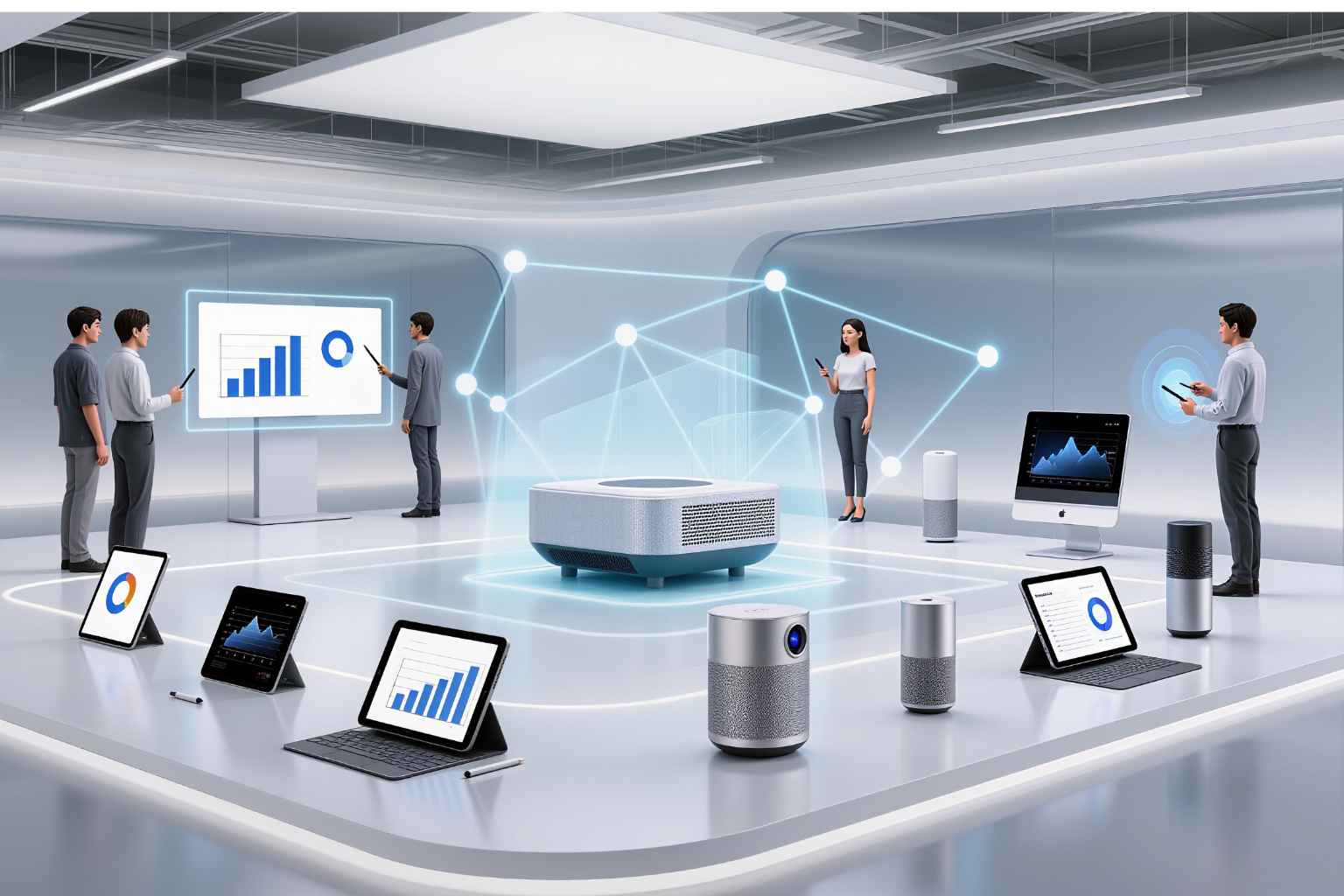
During our digital renaissance, predictive analytics is the brain that is bringing about an increasing ecosystem of smart items. User Data And Pattern Analysis Predictive systems allow devices to predict what needs might arise and prepare themselves accordingly. PromotedUsers can do everything from use a smart thermostat that learns daily habits and automatically changes the temperature to wearing a product they believe will sense health problems prior even before symptoms manifest. While artificial intelligence and data science evolve, smart devices are now not just reactive but proactive life partners!
1. Predictive Analytics in Smart Technology Explained
Predictive Analytics: The use of historical data, machine learning and statistical algorithms to make future predictions. When incorporated into smart products, it can elevate technology from simply automating actions to predicting users behavior. Rather than following orders, predictive-enabled systems learn from experience in an endless stream. This forms an intelligent feedback loop that makes devices more intuitive the more they are used. The end product is technology that feels good, because it’s developed in a way to best fit with the tastes of users -comfortable, safe and as efficient as possible.
2. The Evolution of Smart Devices Through Data
In the early wave of smart home devices, it all came down to simple automation: You either scheduled a time on something or directly told it to happen. Predictive analytics has turned these appliances into learners that can respond to personal lifestyles. Every time users interact with them, these devices amass reams of information about them, from location data, temperature and activity levels to voice commands. Because the algorithms learn over time, they increase their understanding in ways that transform passive machines into active participants in users’ lives. This evolution has fundamentally recast what it means to be convenient and not as doing things for you, but in predicting what you need done next.
3. Predictive Analytics in Smart Devices
Predictive analytics in smart devices is a workflow that organizes raw data into useful patterns of information.
- Data Collection: Sensors and apps in devices collect continual streams of consumer data.
- Data cleaning: The data is cleaned, sorted and shaped for analysis.
- Pattern Recognition: Repeated patterns of trends or behaviors are detected by ML systems.
- Generation of predictions: Techniques predict future events or behaviors based on past patterns.
- Automated: The device changes settings or suggest actions before the user takes any action.
For the first time, smart devices can give more than they take with proactive solutions that actually improve user experiences on-the-fly.
4. Predictive Smart Devices Use in Daily Life
Predictive analytics, in fact, has spread throughout various industries and is fueling a new generation of smart devices.
Notable applications include:
- Smart Homes: Thermostats, light fixtures and appliances that predict preferences.
- Healthcare Wearables: Gadgets that forecast prospective health hazards with the help of biometric data.
- Automotive Systems: Vehicles that Predict Maintenance and Adjust to the Driver.
- Retail & Ecommerce: Voice assistants recommending products based on previous purchases.
- Power management: Real-time power-usage systems that are managed in the moment.
These are the technologies that enable safer, smarter and more sustainable spaces that adapt to user lifestyles.
5. Artificial Intelligence and Machine Learning Perspective
The next-gen predictive analytics in smart devices are powered by AI and machine learning, the work horses underneath this technical stack. Models can be trained using machine learning methods to analyze big data in order to discover underlying relationships and patterns. AI uses these understanding to monitor the well-being of devices. For instance, smart speakers interpret the tone of speech to tailor conversation and an AI-enabled washing machines anticipate ideal levels of water and detergent. As algorithms develop, smart devices will gradually be granted more autonomy taking decisions that are not merely rule-based but driven from context.
6. Predictive analytics in health and wellness devices
One of the largest beneficiary sectors of predictive smart technology is that of healthcare. Wearables, such as fitness trackers and smartwatches, capture real-time health data like heart rates, sleep cycles and activity levels. Predictive analytics use this data to identify anomalies and signal users when they appear to be in poor health, and even notify physicians when intervention is required.
Advantages of predictive healthcare appliances are:
- Early warning signs of chronic illnesses like diabetes or cardiac disease.
- Uniquely tailored health advice based on the way you behave.
- High-risk patients should be persistently guided.
- Healthcare savings achieved by prevention.
- Improved precision for monitoring of treatment and recovery.
Predictive health technology is moving medicine from a treatment approach to wellness going forward.
7. Smart Homes: Anticipating Human Needs
In smart houses, predictive analytics means technology can adapt to your lifestyle. Lights can come on seconds before a homeowner reaches a room, thermostats can preheat a space according to that day’s agenda, and voice assistants can suggest dinner recipes based on ingredients in the fridge. Under the science of every-routine learning, intelligent home environments are built and modified dynamically according to human behaviors. This is not only convenient, but also energy efficient and safe making homes feel more alive and smarter than ever before.
8. Predictive Technologies and Privacy & Ethical Issues
Predictive analytics may make life easier but at the same time it raises questions about privacy, consent and data ownership. Connected appliances also require regular data collection, much of which is personal and sensitive. Data without protections can fail to serve the citizenry, and may even lead to abuse or misuse.
Key ethical challenges include:
- Data sharing without consent / third-party access.
- Non-transparency in prediction explanation.
- Algorithmic bias influencing decision-making accuracy.
- Over-dependence on AI-driven automation.
- Exposing security threats resulting from vulnerabilities in connected devices.
These issues can be solved only if companies make transparency, data security, and consumer control over their personal information a matter of priority.
9. Predictive Analytics in Connected Environments – The Next Step Ahead
The next stage of predictive analytics will involve smarter ecosystems where devices talk to each other. Holidays, vehicles and places of work will exchange data (securely) in order to (seamlessly) provide experiences. Predictive insights will enable them to coordinate smartly – like a car signaling the home system that it’s time to put the air conditioner on to get it nice and cool before you arrive. As 5G and edge computing mature, predictive responses will be faster, more precise and use less power. The end game is a fully adaptive world where technology and human behavior work together seamlessly.
10. Balancing Automation with Human Intuition
As smart devices become smarter, the balance between automation and human judgment is crucial. Predictive technology should aid human intuition, not replace it. The most powerful devices will be the ones that sync information with human agency. Empathy-driven design will become central to the future of human-centered predictive analytics that technology makes life simpler without making it more difficult for people.
Key Takeaways
- Predictive analytics converts smart devices into proactive, learning systems.
- Real-time prediction and personalization in the mobile market relies on AI and machine learning.
- Use case scenarios range from domestic, healthcare to mobility or even energy.
- Privacy and ethical regulation are imperative to the long-term adoption.
- The future is interconnected ecosystems driven by smart prediction.
Conclusion
Smart devices are being redefined into intuitive companions, set to predict and respond at smarter and faster levels as well through predictive analytics. In combining data and AI with situational awareness, predictive systems deliver frictionless adaptive experiences that make convenience,eƒciency, and wellness better than they are now. In the course of these developments, the balancing act between automation and human empathy will be crucial. The future of smart machines will not simply thinking more quickly it will be about thinking smarter on people’s behalf.
FAQs:
Q1. What is predictive analytics in smart devices?
It’s applying data and algorithms to predict what people will do, and then designing products to behave this way in advance.
Q2. So how does AI bolster predictive analytics?
It crunches huge amounts of data to identify trends that can be used to have devices make the right predictions and react a certain way based on human behavior.
Q3. What are examples of predictive smart devices out there?
Predictive analytics powers everything from smart thermostats and health wearables to connected cars, AI home assistants and more.
Q4. What are the risks of using predictive technology?
Yes it’s about data privacy and algorithmic bias and overdependence on automation which all need to be addressed with ethical by design.
Q5. Where is predictive analytics going?
In the future, we are going to have fully connected ecosystems where everything works together in a smart way All experiences will be seamless, more adaptive and highly personalized.
