


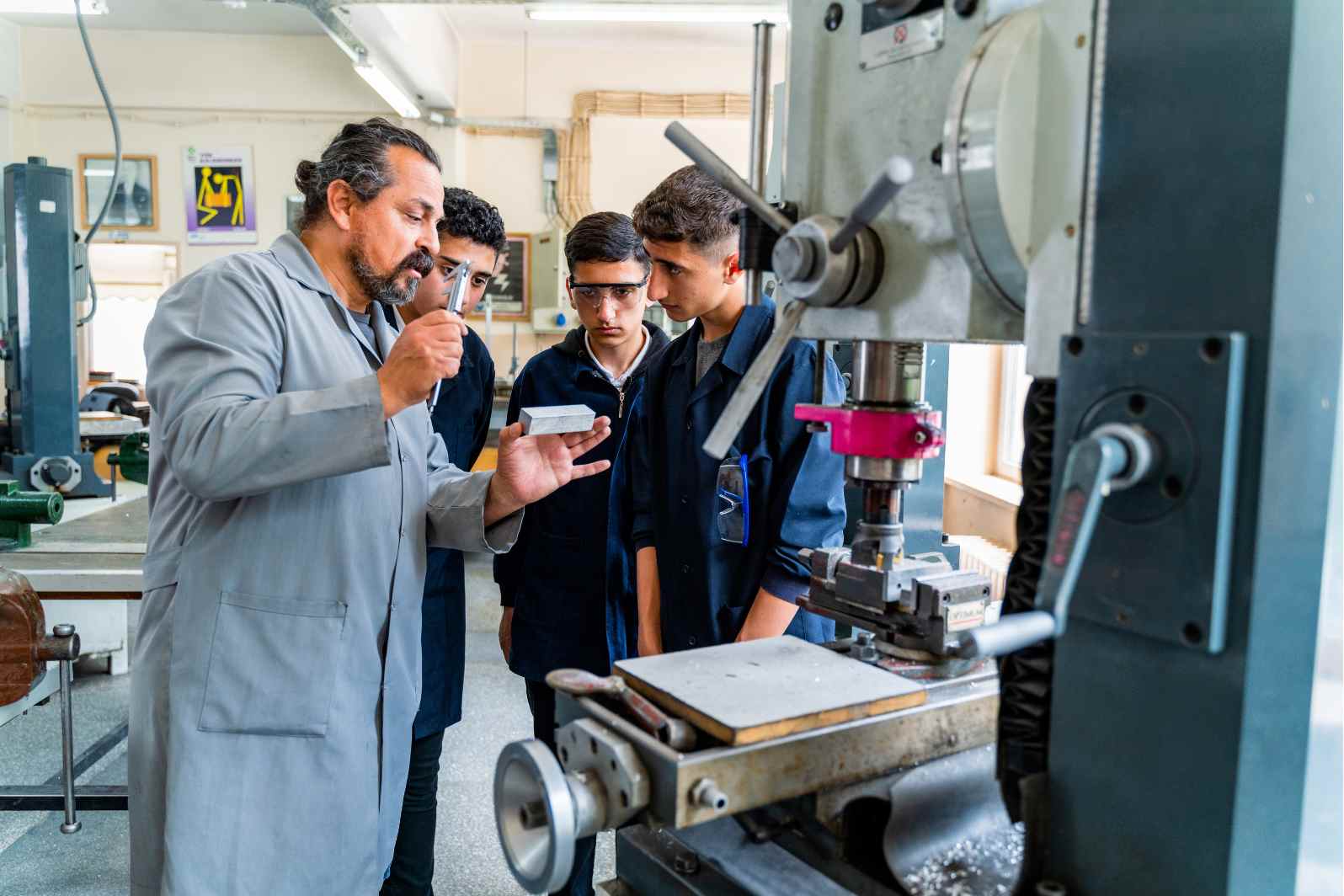
In 2025, the world of work will undertake another revolution as it moves away from a significant emphasis on university degrees and as it shifts towards holistic learning and approaches to thinking which only experience and skills can bring. This is the renaissance of vocational learning – an education based on practice, rather than theory. With education and skills based around modern day industries changing rapidly, skill-based education is now vital for people looking to get – or keep – jobs in new economies. From electricians, data analysts and solar technicians to health care assistants, vocational training is helping us move the needle on what it means to be “career ready.”
1. The Rise of Skill-Based Learning
The certificates modern employers care about the most. Now, it’s about value – what candidates can do, as opposed to what is on paper. Vocational programs are designed to teach marketable skills based on real-world experience students can use right away in a job or career.
For instance, a mechanic learns diagnostics though real-world work in car repair, not just theory. This transition from memorization to application is transforming the education systems across the globe.
2. Changing Attitudes Toward Vocational Education
Once considered a fallback, vocational learning now has a cache. The value of technical labour is being increasingly acknowledged, by governments, educators and industry. Countries such as Germany, Japan and Singapore have had a history of integrating vocational training into their economic systems — a momentum other countries like India, Canada and the U.S. are looking to replicate.
In India:
Labour reforms India has begun focusing on ‘on the job training’ through the Skill India Mission and Pradhan Mantri Kaushal Vikas Yojana (PMKVY).
Upgraded ITIs At Premium: InfobytesModernised Industrial Training Institutes (ITIs) are preparing students for lucrative career in technical trades.
3. Serving the Needs of Modern Industry
Automation, renewables and smart manufacturing has given rise to a shortage of skilled workers across the world. VET closes this gap right away.
What industries are looking for now:
- Operate advanced machinery.
- Manage robotics and automation systems.
- Maintain digital infrastructure.
Partnering with industry leaders and vocational education providers to make sure the graduates are job ready from day one.
4. Fast, Focused, and Affordable Learning
The primary reason is speed and cost. University degrees, which take years, are not like vocational courses that usually run for a few months to two years.
Advantages include:
- Lower tuition fees.
- Quick entry into the workforce.
- Direct job relevance.
- High employability rates.
Solar installation courses, for example, which only take six months to certify in can go directly into jobs within renewable energy.
5. The Role of Technology in Training of Skills
Vocational training has been upgraded in technology and moves beyond the older-day workshops. VR, AR and simulation software enables students to safely practice complex procedures.
For example, VR welding simulators help students practice in real-world scenarios without the material cost. Meanwhile, digital platforms like Coursera and Udemy already started to provide hybrid technical courses which marry online theories and offline workshop recently.
6. Reskilling and Upskilling the Workforce
The new economy requires lifelong learning. Specialists can no longer get by with just one qualification for their entire working lives. Programmes in vocational education now concentrate on re-skilling and continuing skill development, so that employees can maintain during life into a world of new technologies and job markets.
Today’s most popular areas for reskilling in 2025 will be:
- Artificial Intelligence maintenance
- Data analytics and cybersecurity
- Electric vehicle technology
- Healthcare support and telemedicine
This openness allowing the workforce to compete and prepare for the future.
7. Recognition of Skills Trade around the World
At last, skilled workers are being acknowledged as the bedrock of any economy. Nations with successful vocational education systems have less unemployment and greater productivity.
In Europe, “dual education” is the name for a system that combines classroom learning with apprenticeships, to ensure students get both knowledge and experience. Now, the model is being taken up in Asia and Africa – employing young people without student debt.
8. Empowering Youth Through Employment Opportunities
Vocational education and training assist young people to get into work earlier, stand on their own feet and find out what they like. It also promotes entrepreneurship – lots of well-educated graduates start their own small companies.
For instance, a vocational graduate in digital design could start a freelance agency while a trained electrician might set up his or her independent service business. These small businesses and self employed opportunities are vital to local economies.
9. Bridging the Education-to-Employment Gap
Historic institutions have great difficulty keeping their teaching disciplines in sync with the world of work. Trade schools are addressing this by collaborating with specific industries to create programs that reflect existing requirements.
How this helps:
- Reduces unemployment rates.
- Generates a consistent pipeline of skilled workers.
- Nurtures confidence from employers on training institutes.
The upshot is that companies are now hiring far more vocational graduates.
10. Vocational Learning and the Future of Work
Adaptability will be the future of work. The workers who can learn, unlearn and relearn will determine the next generation of industries. That foundational work is the purpose of vocational learning, which teaches the flexibility and practical problem solving that is meaningful for so much “knowledge” to be nailed in its place.
Whether it’s environmentally friendly construction or cloud computing management, the class of 2025 isn’t about theory; it’s a program focusing on experience in action. Vocational education has emerged as the link between education and employability.
Key Takeaways
- Career and tech ed is transforming the world’s workforce through hands-on experience.
- Minds are changing, and government initiatives are reviving appreciation of skilled labor.
- VR and AR technology is changing the way skills are taught and practiced.
- One of the advantages of vocational training is that short, inexpensive programs make it available to everyone.
- Reskilling and upskilling they say are essential for people wanting long-term career stability.
- Industry A partnership with industry guarantees that vocational courses correspond to job market requirements.
- Vocational education has the added advantages of empowering the youth and entrepreneurship.
- By all measures, the future is for people who are skilled, adaptable and tech-savvy.
Conclusion
“Vocational learning is not an alternative anymore – this is the future. The world’s labor force is moving towards practical education that allows them to go on and build careers not just degrees (?) in 2025. When industries change – and new technologies arise – trade schools help workers stay relevant, confident and employed. Finally, the world is waking up to something we’ve known all along: Real skill is real power – and vocational education is its most solid foundation.
FAQs:
Q1. What’s behind the resurgence of vocational education?
Because they will be expected to do jobs that require highly-skilled employees who can complete the job-specific tasks, and learn new technology.
Q2. How long is the example of vocational studies?
Most programs are between 6 months to 2 years, depending on the field and the depth of specialization.
Q3. Are job skills a passport to entrepreneurship?
Yes, many aren’t willing to be workers, because after they get trained and earn some practical experience in the courses of vocational schools, they start their own businesses.
Q4. What are the best vocational trends in 2025?
Renewable energy, robotics, data analytics and reporting, healthcare assistance and digital marketing are some of the popular choices.
Q5. How does the economic growth get assistance from vocational training?
It generates a flow of skilled workers, aids in reducing unemployment and helps innovation-driven sectors.
